

Best Coastal HVAC Corrosion Protection Coating
Quick answer: A coastal HVAC corrosion protection coating is a thin (0.003" or less) phenolic or polymer barrier applied to your AC's coils and cabinet to block salt air, moisture, and airborne acids. Within a few miles of the Gulf, pairing a coil coating with a corrosion-resistant all-aluminum coil and an annual outdoor-unit rinse is the most effective way to keep a Sarasota AC system from failing years early.
If you live within a few miles of the Gulf, salt air is quietly working against your air conditioner every single day. Along the Sarasota, Bradenton, and Manatee County coastline, coil corrosion is one of the most common and most expensive reasons an AC system fails years before it should. The good news: with the right protective coating, corrosion-resistant equipment, and a little routine maintenance, you can add years of life to your system. And if you've been searching for AC coil coating near me or HVAC corrosion protection near you along the Gulf, Green Cooling Solutions handles it locally, from Sarasota to Manatee County.
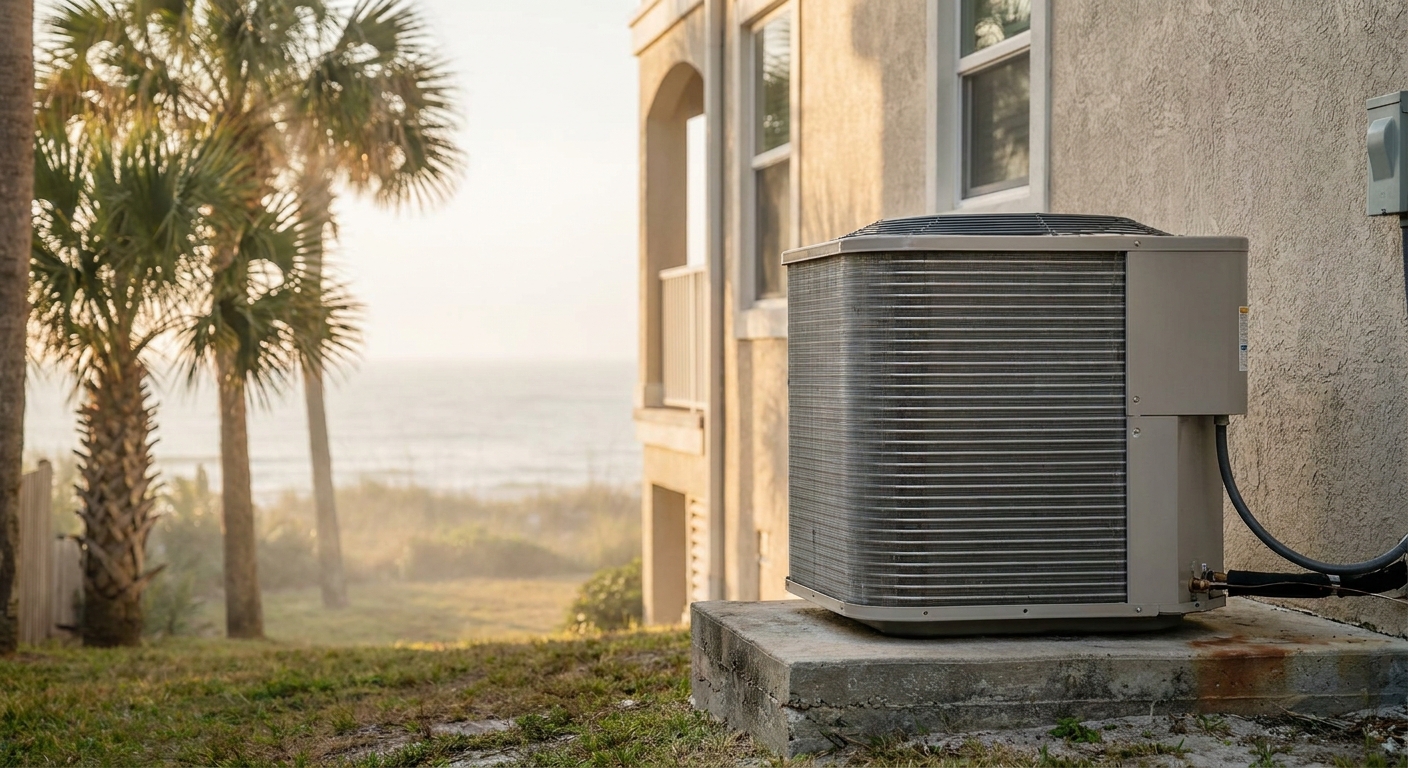
What Coil Corrosion Actually Costs in Sarasota
Corrosion is the single biggest lifespan killer for coastal AC systems. Between constant year-round runtime, humidity, and salt exposure, a typical Sarasota system lasts closer to 12 years, well short of the 15–20 years manufacturers advertise for milder climates.
And when corrosion eats through a coil, it's rarely a cheap fix. A corroded evaporator or compressor coil replacement typically runs $3,000–$4,000 installed, often enough to push a homeowner into replacing the whole system. A protective coating is a fraction of that cost.
What Causes AC Coil Corrosion on the Gulf Coast?
Every hour your outdoor unit runs, it pulls Sarasota's salty, humid air across bare metal coils, and indoors, everyday household chemicals quietly attack the evaporator coil. The two failure modes we see most on coastal systems:
- Pitting corrosion. Chlorides from sea salt (and fluorides) eat into the coil surface, opening pinholes that become refrigerant leaks. It moves fast on unprotected units near the water.
- Formicary ("ant's nest") corrosion. Acids from cleaning solvents, adhesives, paint, and building materials tunnel microscopic channels through copper coils. It's slower, and usually invisible until the coil is already leaking.
Corrosion can show up within weeks of a new install or take years to surface, but within a few miles of the Gulf, it's a question of when, not if.
How HVAC Corrosion Protection Coatings Work
A coil coating is a thin protective barrier, typically an epoxy phenolic, modified phenolic, or water-based polymer, applied directly to the coil and cabinet so salt spray and airborne acids never reach bare metal. The detail that matters most is thickness: a coating should be applied at no more than 0.003 inches. Any thicker and it starts insulating the coil, hurting heat transfer and driving up your power bill.
Applied correctly, a quality coating protects the coil without sacrificing performance. Infinigard, a two-part hybrid corrosion inhibitor, shields the coils while maintaining liquid and gaseous flow rates, and can reduce air conditioning energy costs by up to 15%, protecting your system while improving both efficiency and indoor air quality.
Coating vs. Corrosion-Resistant Coils: Why We Install Lennox
A coating protects the coil you have, but the coil itself matters just as much in a coastal climate. Traditional copper-fin coils are exactly what salt air attacks first.
That's a big reason Green Cooling is an exclusive Lennox dealer. Lennox's Quantum Coil uses an all-aluminum micro-channel design that resists the galvanic corrosion that eats traditional copper-fin coils in Florida's salt-heavy air. For homeowners near the water, pairing corrosion-resistant equipment with a protective coating is the strongest defense available.
AC Coil Coating in Sarasota: How Green Cooling Protects Your System
Protecting a coastal AC system isn't one product. It's a process:
- AC coil coating in Sarasota for systems exposed to Gulf salt air.
- Corrosion-resistant Lennox Quantum coils on new installations.
- Annual outdoor-unit rinse to flush salt buildup before it can do damage.
- MeasureQuick commissioning on every install, with a project manager on-site and a QC walkthrough before our crew leaves, so your system is verified, not just installed.
Why Sarasota Homeowners Choose Green Cooling
- No-commission technicians. Flat-rate pricing and no incentive to upsell.
- Locally owned, founder-led. Not a private-equity rollup.
- NATE-certified technicians and 24/7/365 emergency service.
- Honest recommendations on whether to coat, repair, or replace.
AC Coil Coating Near You: Coastal Corrosion Protection Service Area
When you search for AC coil coating near me or HVAC corrosion protection near you from a home near the Gulf, Green Cooling Solutions dispatches NATE-certified, Florida-licensed technicians locally. We provide protective coil coatings and coastal corrosion protection throughout Sarasota, Bradenton, Lakewood Ranch, University Park, and Manatee County, and we'll tell you honestly whether your coils are worth coating.
Frequently Asked Questions
How long does an AC system last near the Gulf in Sarasota?
A typical Sarasota system lasts about 12 years, well short of the 15–20 years manufacturers advertise, and salt-air corrosion is the #1 lifespan killer for homes within a few miles of the water. Protective coatings, corrosion-resistant coils, and an annual rinse help close that gap.
How much does coil corrosion cost to fix?
A corroded evaporator or compressor coil replacement typically runs $3,000–$4,000 installed — often enough to push homeowners into a full system replacement. A protective coating is a fraction of that cost.
How thick should an HVAC coil coating be?
No more than 0.003 inches. Any thicker and the coating starts to interfere with heat transfer, which costs you efficiency.
How do I protect my air conditioner from corrosion?
Three layers of defense: a protective coil coating (applied at install or retrofitted to an existing unit), corrosion-resistant all-aluminum coils like the Lennox Quantum coil, and an annual outdoor-unit rinse to flush salt buildup before it does damage.
What are the three basic types of corrosion protection?
Barrier protection (coatings that keep salt and acids off the metal), material selection (corrosion-resistant metals like all-aluminum micro-channel coils), and preventive maintenance (regular rinsing and coil cleaning). Green Cooling uses all three on coastal systems.
What is the $5000 rule for HVAC?
Multiply your system's age by the repair cost — if the result tops $5,000, replacement usually beats repair. A 10-year-old system facing a $600 repair (10 × 600 = $6,000) is a replacement candidate. On coastal homes, corrosion shortens the remaining lifespan, which tips the math toward replacement even sooner.
How often should coastal homeowners rinse the outdoor unit?
At least once a year. An annual outdoor-unit rinse flushes salt buildup off the coils before it can start pitting the metal — and it's included in Green Cooling's coastal maintenance approach.
Who does AC coil coating near me in Sarasota?
Green Cooling Solutions provides AC coil coating near me — and near you — across Sarasota, Bradenton, Lakewood Ranch, and Manatee County, along with corrosion-resistant Lennox Quantum coils on new installs. Locally owned, NATE-certified, no-commission technicians, and honest advice on whether a coating is worth it for your system.
Protect your system before the salt wins. If your AC sits within a few miles of the Gulf, don't wait for a refrigerant leak to find out your coils are corroding. Searching for coastal HVAC corrosion protection near you? Call (941) 231-5042, or request a coastal corrosion assessment online, and we'll tell you honestly whether a coating, a coil, or a full system is the right call.